
 That’s it. Ugandan coffee
Melbourne, Australia | NEWS CORRESPONDENT | Uganda’s presence at the Melbourne International Coffee Expo is no longer just about being seen. It is about being assessed. What began as curiosity has quickly shifted into evaluation, as global buyers move from tasting to testing the country’s readiness for high-value markets. At the centre of this moment is a more urgent message. Uganda’s coffee is being tasted differently. Now, it must be delivered differently.
Australia represents one of the most disciplined coffee markets in the world, where quality is not assumed but measured, and consistency is not desired but demanded. Uganda’s coffee has long been present in this market, largely through blends where its Robusta provides body, crema, and structural balance. Yet that presence has remained largely invisible.
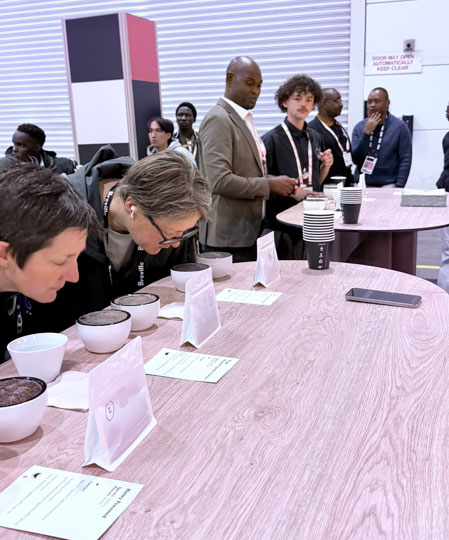
What is now changing is recognition. Strong cupping feedback at the expo has revealed a shift in perception, with buyers increasingly acknowledging Uganda’s coffee for its depth, structure, and improving quality. Demand is moving toward traceable supply chains, origin-specific offerings, and reliable espresso performance. Uganda is well-positioned to meet this demand, but positioning alone is no longer enough. Delivery must now match perception.
Uganda’s message to international buyers is becoming more refined and more demanding of itself. High Commissioner to Australia, Dorothy Hyuha Samali, has emphasised that Uganda is stepping forward not only to be recognised, but to be trusted.
The country is engaging as a serious origin, opening pathways for partnerships that extend beyond supply into value creation. However, she has also cautioned that as these opportunities emerge, truthfulness and reliability will determine whether they endure. In a market like Australia, credibility is currency.
This reality was further reinforced through the presentation delivered by Gordon Katwirenabo, which carried significant weight in shaping how Uganda was understood. His presentation did more than inform.
It translated Uganda’s progress into a structured narrative of readiness, outlining improvements in quality assurance, post-harvest handling, and value addition. It effectively did the heavy lifting in positioning Uganda as a credible participant in premium markets, while also acknowledging the gaps that must be addressed to sustain that position.
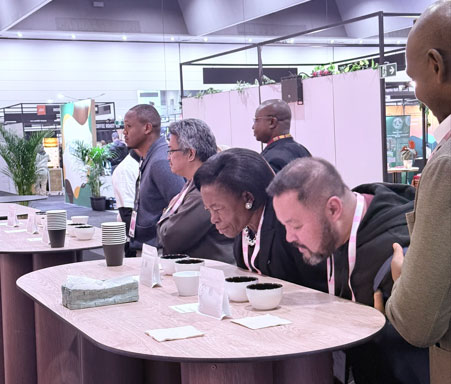 High Commissioner to Australia, Dorothy Hyuha Samali,(middle)
Uganda’s position becomes clearer when placed alongside global competitors. Brazil dominates through scale and efficiency. Vietnam leads in Robusta volume.
Both operate within mature and highly structured systems. Uganda offers something different. It combines strong production capacity with improving quality and a value chain that is still evolving. This creates opportunity, but also exposes vulnerability. Unlike established markets, Uganda must build systems at the same pace that perception is rising. Without that alignment, growth risks becoming unstable.
Operating within Australia’s regulated import environment requires more than quality coffee. It demands consistency, traceability, and compliance at every level of the value chain. Uganda is making progress in aligning with these standards, but Day 2 conversations at the expo made one thing clear. Buyers are now asking harder questions. Can Uganda deliver consistently across shipments. Can exporters maintain quality at scale. Can traceability systems meet global expectations. These are not technical details. They are market entry conditions.
At the same time, Uganda’s strategy continues to evolve toward value addition. Moving beyond green bean exports, the country is promoting origin-based roasting, branded products, and deeper participation in global value chains. This shift is essential, but it also raises the stakes. Value-added markets demand higher discipline, stronger systems, and greater accountability.
Uganda’s engagement at the expo reflects a critical transition point. The country has moved from being recognised for its potential to being evaluated for its performance. The market has upgraded its perception of Uganda’s coffee. What now follows is the requirement for Uganda to upgrade its execution.
The opportunity is clear. The interest is real. The product is being understood differently.
But in global coffee markets, perception opens the door.
Execution determines whether it stays open