
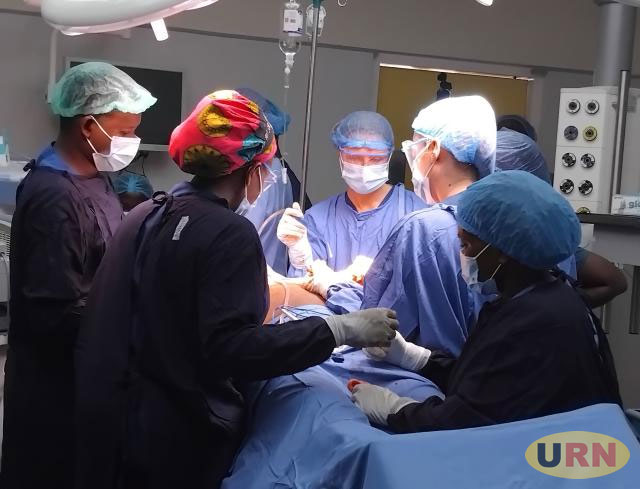
 Medics conducting plastic surgery on a mother inside Mulago main theatre. The ongoing initiative is a collaboration between Mulago Hospital and Interplast Netherlands.
Kampala, Uganda | URN | A specialized breast reconstruction camp at Mulago National Hospital is restoring hope to women living with mastectomy scars and physical deformities.
Led by Dr Irene Asaba Mugisha, head of the Plastic and Reconstructive Surgery Unit, the camp provides life-altering breast reconstructions and reduction surgeries, free of charge. For many of the beneficiaries, these procedures, once viewed as an impossible luxury, are a vital step in their healing journey.
The ongoing initiative, a collaboration between Mulago Hospital and Interplast Netherlands, specifically targets survivors who have completed the gruelling cycles of chemotherapy and radiotherapy.
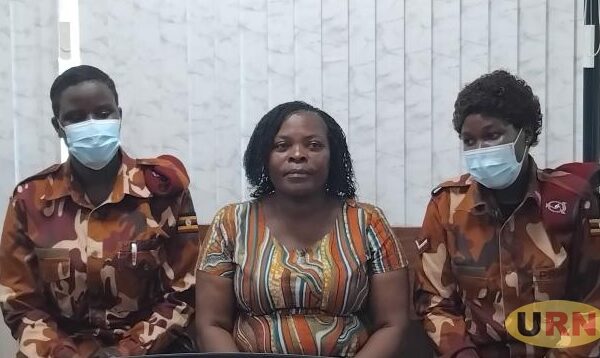
For Agnes Gasi, 49, the journey from Arua District was fuelled by a desire to feel “whole” again. After losing a breast to cancer in 2015, Gasi struggled with the emotional toll of her physical change.
Speaking through her sister-in-law, she explained that while she had already raised five children, the surgery was about reclaiming her dignity and femininity.
“She used to feel incomplete walking in public,” her sister-in-law noted, describing the relief Gasi felt following the successful procedure.
The camp also treated Joy Nakimuli, a resident of the Ssese Islands in Kalangala District.
Nakimuli suffered from macromastia, a condition where abnormally large breasts cause chronic back, shoulder, and chest pain.
After a decade of physical struggle that left her unable to perform daily tasks, Nakimuli traveled to Mulago after seeing a flyer on WhatsApp.
Following her surgery on Wednesday, she reported that the chronic pain had finally subsided.
Dr. Asaba Mugisha emphasizes that the psychological impact of breast loss is often overlooked in traditional cancer care.
“We felt that this is a neglected group of patients who have undergone so much trauma,” Dr. Asaba Mugisha said.
“Most have never been told that reconstruction is possible- that they can feel feminine again and overcome the social stigmas they face.”
In Uganda, surviving breast cancer often leaves a physical reminder in the form of a mastectomy scar, which can carry a heavy burden of trauma and a lost sense of self.
Breast reconstruction is a complex, “artistic” endeavor. Unlike standard surgeries, each procedure takes between three and six hours.
Surgeons often use the patient’s own tissue, typically harvested from the abdomen or back, to “donate” and recreate a new breast mound.
Due to the intensive nature of these operations, the surgical team expects to handle between 13 and 15 cases by the end of the week.
Dr. Yenda Hop, a volunteer plastic surgeon from Rotterdam who has worked in Uganda for seven years, highlighted the importance of professional exchange.
“In the Netherlands, I can specialize solely in breast patients. Dr. Irene and her team have to take care of everyone,” Dr. Hop explained.
“By doing these surgeries together, we are ensuring the skills are adapted here. Eventually, our help won’t be needed because the local capacity will be self-sustaining.”
In Uganda’s private sector, breast reconstruction can cost upwards of UGX. 15 million shillings, a price tag far out of reach for the average woman.
While this week-long camp cannot meet the overwhelming national demand, Dr. Asaba Mugisha noted that plans are underway to build capacity and eventually roll out plastic surgery services to regional referral hospitals.
The medical team also worked to “demystify” common myths surrounding the surgery.
“Women are often told that cancer will grow back in the new breast or that they will have an unacceptable look. That is simply not true,” Dr. Asaba Mugisha said. “We recreate a look that allows them to live a high-quality, confident life.”