

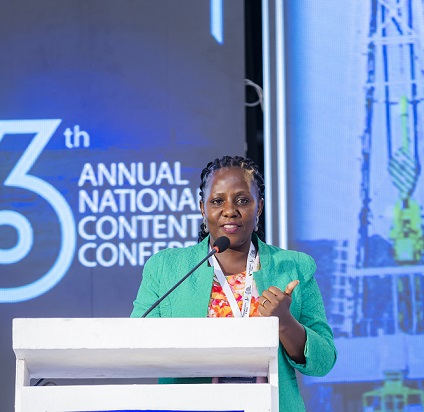
By Betty Namubiru
Across the African continent, oil-producing countries such as Nigeria, Angola, and Ghana have demonstrated that deliberate policies centered on joint ventures, structured enterprise development, and phased skills development can increase local participation in operations to between 70 and 80 percent. Uganda is pursuing a similar pathway, anchored in progressive capacity building and regulatory support.
As Uganda’s oil and gas projects move steadily towards first oil, the transition into the operations phase is a reality and presents vast opportunities for participation of Ugandan companies. This phase will be characterized by sustained production from several oil fields, generating significant opportunities in maintenance, logistics and support services. This will create entry points for companies with varying levels of expertise and experience. From the outset, deliberate efforts have been made to ensure that Ugandans and Ugandan firms are positioned to participate meaningfully.
Following the significant investment in capacity development and industry exposure achieved during the development phase, the licensed oil companies have confirmed that Ugandan companies are well positioned to secure contracts for routine operations. These include construction of chemical storage facilities, Diesel Engine Maintenance, Generic Chemicals Supply, Industrial Area maintenance, Laboratory Services Contracts, Operator Camp maintenance, waste management, Fire Fighting, Lifting Inspection, Fuel Supply, Pest Control, Intra field Logistic (Cargo handling, Crane, forklift, and freight forwarding among others. These services align closely with existing Ugandan capabilities and require only moderate levels of specialized certification. International experience shows that, once production stabilizes, up to 80 percent of such site services can be delivered by national companies.
At the intermediate level, Ugandan led joint ventures are expected to take on more technical maintenance scopes. These include Gas Compressor Maintenance, Analyzer Maintenance Services, Fiscal Metering Maintenance, Provision of Maintenance Services for Gas Turbines, Infield Pipeline Pigging, Operation and Maintenance of Fired Heaters, Specialized Electrical Maintenance Services, Specialty Chemicals Supply, Valve Management and Repair, Fabric Maintenance, and Inspection and Corrosion Services Structured technology transfer and hands-on training will be critical in enabling Ugandan firms to gradually assume greater responsibility. This approach reflects lessons from Ghana, where joint ventures have enabled national companies to undertake increasingly complex maintenance, including turbine related services.
Highly specialized operations will continue to involve Original Equipment Manufacturers (OEMs), particularly in areas like electrical control systems, pumps, integrated safety systems, flow metering technologies, and variable speed drives. While these scopes currently depend on scarce global expertise, the Petroleum Authority of Uganda together with industry will promote strategic partnerships that are expected to facilitate knowledge transfer.
Workforce development remains a cornerstone of the transition to the Operations Phase. Training initiatives have already equipping nearly 500 Ugandan technicians and engineers through programs conducted both at national and international levels, complemented by on-site mentoring during operations. This phased approach mirrors successful models in countries like Norway and Brazil, where sustained investment in human capital significantly increased domestic participation in engineering and technical operations.
Encouragingly, dozens of contracts are already in advanced stages of procurement. These span facilities management, workover rigs, supply of chemicals, mechanical maintenance, catering, inspection services, and compressor support. These opportunities will be leveraged to further support national participation through emphasis on technology transfer as a key requirement.
Nevertheless, the sector continues to face challenges that also have been observed in other emerging oil economies including gaps in technical skills and certification, and constrained access to financing.
To address these challenges, a series of targeted interventions are being advanced. These include the establishment of a Local Content Development fund to improve access to affordable financing for Ugandan firms, and the rollout of a national enterprise certification program for the oil and gas sector, aimed at strengthening the competitiveness, compliance, and credibility of local suppliers. In parallel, continuous technical skills development initiatives are being implemented in close collaboration with industry players and the private sector, to ensure that Ugandan professionals are equipped for both current and future operational demands.
Together, these measures are expected to accelerate the participation of Ugandan companies across all tiers of the operations phase. With sustained commitment and coordinated action, Uganda is well positioned to build a resilient, inclusive, and locally driven oil and gas industry that will deliver long term national value.
The Author is the Manager National Content Monitoring, at the Petroleum Authority of Uganda