

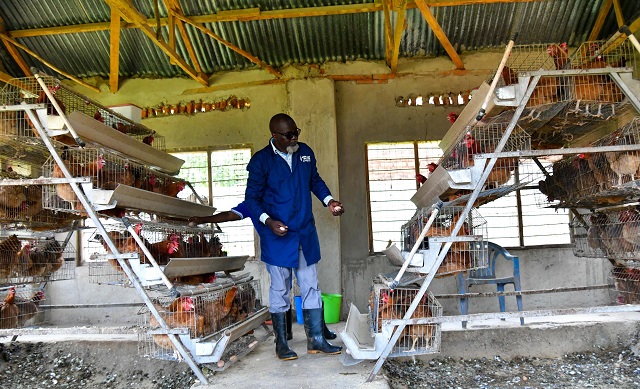
 Nathan Mununuzi
Bugweri, Uganda | PATRICIA AKANKWATSA | Every Saturday afternoon, farmers converge at the home of Nathan Mununuzi, turning his compound into an informal training ground where poultry is taught not as subsistence activity, but as a structured rural enterprise.
What is unfolding here is part of a broader shift under the Food and Agriculture Organization (FAO) of the United Nations–China South–South Cooperation Programme, an effort increasingly defined not by inputs distributed, but by knowledge transferred and replicated across communities.
For Mununuzi, the transformation began when district officials identified his farm as one of the demonstration sites.
“It was through the district that brought me these people. They visited and they found actually we were already doing the farming, but of course the scale was a bit low. I had invested more in the structures,” he said.
“ They found when I had put up units, but some of them were not being used. So they helped me, they gave us 500 chicks and the feeds”
“And I really appreciate this support. It has helped us to increase further”.
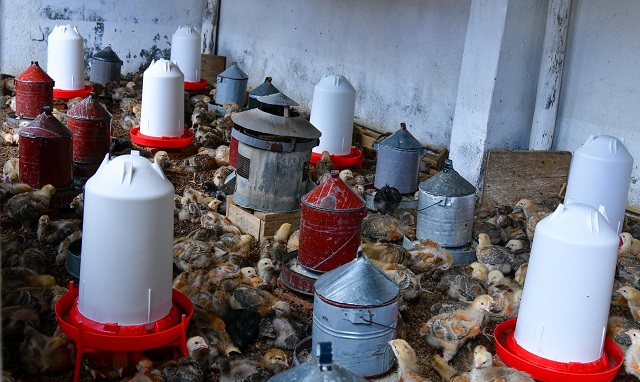
The intervention 500 chicks per model farmer alongside feed support was designed not as a handout, but as a live demonstration of improved poultry management. Farmers were required to already have basic structures, which were then upgraded through training.
“So instead of concentrating on the stocking, since the stock was there, I continued with the structures and i've even put a lot more that I’m yet to use for to expand even the enterprise,” Mununuzi added.
But the deeper value of the model lies in replication.
“It wasn’t a loan that made me able to pay, but also the understanding was that this farm is not only me and as me, but it is also, it is kind of demonstration for other farmers,” he explained.
“Farmers come here to learn. I may not give them the birds, but I share the knowledge freely. They see how the farm operates and understand what it takes how many birds to keep, how much feed is needed, and for how long. We are even able to guide them through the basic calculations.”
By mid-afternoon, groups of farmers rotate through the compound, discussing feed formulation, housing, disease control, and market access practical bottlenecks that have historically undermined smallholder poultry
“It may not necessarily be only the poultry, but it is one of the major enterprises we talked about,” Mununuzi said.
With demand for poultry products steadily rising in Bugweri’s rural markets, model farms are increasingly functioning as both production sites and informal service hubs offering meat, chicks, and hands-on training to surrounding communities in one place
“And as we speak now, the demand for these products is high. People here on the village know if you want chicken for eating, you will find it here. If you want chicks for rearing, you’ll find them here. If you want knowledge on how to rear the birds, you come and you get the knowledge. We don’t stop people from coming to land and we don’t charge anything”.
The model farm is gradually evolving beyond production into a rural enterprise hub.
The broader ambition is to integrate more actors into the poultry value chain.
“ I’m looking at getting more other people into this business, but also having people take some portions of the value chain”, he said.
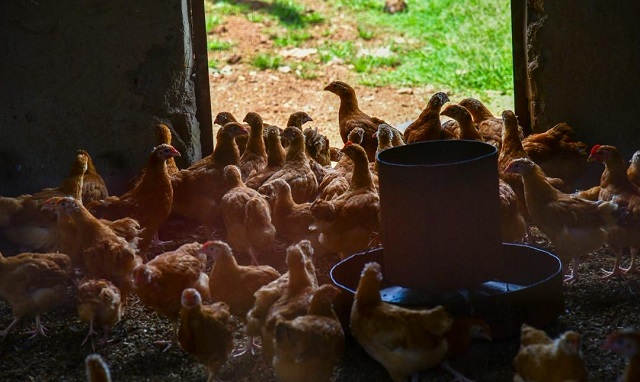
At the production level, the enterprise is already generating employment. “Now I may, I can just talk of the direct jobs, but the indirect ones are enormous,” he said.
While Mununuzi’s farm illustrates the micro-level transformation, district authorities say the model was deliberately designed to scale knowledge rather than distribute resources.
Dr Timothy Bagore the district veterinary officer Bugweri district said that the approach focused on selecting farmers capable of training others.
“We were tasked with selecting prominent good farmers who can pass on the knowledge to other farmers and who can let the farmers come to their places to study,” he said.
“We based on the population of farmers in the area, the concentration of poultry farmers in the area and also the capacity of these farmers to have structures to facilitate the trainings on the farm.”
“That’s how we came up with five farmers who benefited from the first lot of birds. Each farmer benefited from 500 birds, either layer or sasso. They also benefited by getting feed to sustain the birds for about two months.”
Crucially, the intervention emphasized technical backstopping and continuous extension support. “We were also available to give technical backstopping and support these farmers in the day-to- day running of their farms,” Bagore added.
“Also, we were available, together with the Chinese cooperants and officials from the ministry, to guide them and also pass on the knowledge, especially the up-to-date farming practices, such as biosecurity, cost-friendly feeding and all other technicalities.”
At the programme level, the poultry initiative emerged as a response to structural constraints facing smallholder farmers, particularly low household incomes and high mortality rates among chicks.
Dr Jacob Mukose from the Ministry of Agriculture Animal Industry and Fisheries (MAAIF) Livestock National Counterpart for FAO China-Uganda South-South Cooperation Phase 3. said the intervention targeted both.
“This project has been here for some time, from Phase 1, Phase 2, Phase 3, so we are in the Phase 3,” he said.
“But in this project, that is when we started the poultry enterprise, basically to address certain bottlenecks within the region. And that was basically on household income.”
“And we looked at the poultry enterprise, because it could be done by any household, the smallest household.”
However, he noted that technical gaps had previously undermined the enterprise. “So many farmers we interacted with, were losing almost 50%, more than 50% of the old chicks,” he said.
“Those were their biggest problems the management of the old chicks then the sourcing of the chicks.”
The demonstration model was therefore designed to address both knowledge and practice simultaneously.
“To understand how much they had absorbed, we had to give them some birds as demonstration. So we delivered an average of 500 birds per group, basically to train people on how to raise the old chicks,” Mukose explained.
Early results suggest a shift: farmers trained under the programme are reinvesting independently, purchasing their own chicks and expanding operations.
“We have achieved one of our goals and farmers have testified. They have bought birds and now these chicks have grown up and have sold off,” he said.
At the international level, programme evaluators say the Bugweri model demonstrates how knowledge-driven interventions can deliver measurable outcomes.
Debel Gutta the programme specialist of the South South Cooperation at FAO said field observations point to three key gains.
“We see three areas where tangible results has been achieved. Thanks to this project through the local farmers have acquired the technology acquire the new skills on how to construct and manage houses for for for poultry for chicken.”
“They also have acquired the the know-how how to detect diseases, early disease, and prevent them and that has significantly lowered the mortality rates of chicks.”
“And farmers are also telling us that they have also learned on how to make local feeding significantly reducing the cost of the production cost.”
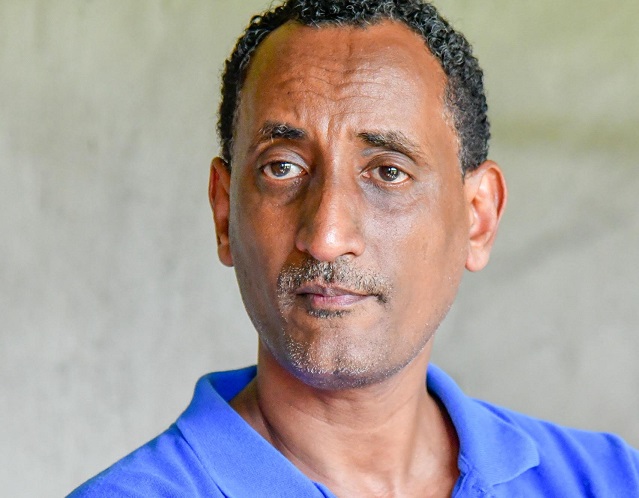 Debel Gutta
The next phase, he added, is institutionalisation.
“So, these are some of the lessons learned and in the next step, we need to scale up. We need to sustain the results achieve,” Gutta said.
At Mununuzi’s farm, that scaling is already visible not through formal expansion plans, but through the steady stream of farmers who come, learn, and replicate.